NAD+ (NAD)
buy in Ukraine
Cellular energy + metabolism support
Ships tomorrow (Mon) · before 19:00
Delivery Tue, Sep 29 · Nova Poshta
NAD+ — injectable coenzyme for cellular energy and metabolism. Support during a weight-loss course (self-reported client impressions). Research-grade, with DOZA specialist supervision.
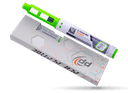
Pen Peptide produces NAD+ in three pen variants: 200mg/2ml (200 clicks × 1mg), 500mg/3ml (300 clicks × ~1.66mg) and 1200mg/3ml (300 clicks × 4mg). Manufacturer protocol for 1200mg pen: 10 clicks × 2 times daily every other day — 1 pen fully covers 30-day course. For smaller 200mg variant — either starter 10-day course (20 clicks × 2 times/day), or 30-day course with daily 7 clicks dose. Break between courses 15–20 days. To maintain effect — 2–3 courses per year.
Free specialist consultation
Benefits
- ✓Cellular energy support via mitochondrial metabolism
- ✓Memory, concentration, mental clarity — self-reported client impressions
- ✓Activates sirtuins SIRT1–SIRT7 (preclinical data)
- ✓Role in glucose and lipid metabolism (fundamental biochemistry)
- ✓PARP-1 substrate — DNA repair (preclinical data)
- ✓Anti-aging protocol hypothesis — cellular health support
- ✓Endurance and recovery — self-reported impressions
- ✓Role in circadian rhythm (preclinical data)
- ✓Purity ≥98%, GMP, stabilized MSSPT-formula from Pen Peptide
Who may find it relevant
- ✔️For chronic fatigue, reduced energy, burnout syndrome
- ✔️During weight loss program with Mounjaro/GLP-1 — compensates possible energy reduction
- ✔️After age 35–40 — NAD+ levels decline with age (Massudi et al., 2012)
- ✔️With reduced concentration, brain fog, memory decline
- ✔️For athletes to accelerate recovery and increase endurance
- ✔️Those seeking to slow age-related changes and maintain cellular health
How to take
Pen Peptide manufacturer protocol depends on pen variant:
• 1200mg pen (1 click = 4 mg): 10 clicks × 2 times/day every other day — 1 pen fully covers 30-day course. This is the main recommendation.
• 500mg pen (1 click ≈ 1.66 mg): 24 clicks × 2 times/day every other day — for those wanting to start with smaller variant.
• 200mg pen (1 click = 1 mg): for starter 10-day course 20 clicks × 2 times/day; or for 30-day — 7 clicks/day with daily administration.
Subcutaneous injection in abdomen or anterior thigh. Rotate injection sites. Better in morning or before 4 PM (excess energy may interfere with sleep).
Every other day is fundamental: NAD+ has cumulative effect, rest days allow cells to "assimilate" the coenzyme.
Break between courses 15–20 days. Optimal 2–3 courses per year.
Storage: NAD+ is sensitive to LOW temperatures — DO NOT freeze. Store at 2–8°C or room temperature (manufacturer allows), avoid direct sunlight.
Before starting — DOZA specialist consultation and glucose analysis (NAD+ affects its metabolism).
Full description
NAD+ (nicotinamide adenine dinucleotide) is a critically important coenzyme involved in over 500 enzymatic reactions in every cell of the body. It regulates cellular energy (electron transfer in mitochondria), glucose and lipid metabolism, DNA repair, sirtuin activity (longevity proteins), and circadian rhythm. Tissue NAD+ levels decline with age: this was shown in human skin (Massudi et al., PLoS ONE 2012), and brain MRS studies estimate a ~14–18% decline between ages 25 and 70; the popular "half every 20 years" figure is not supported by direct data. Age-related decline is associated with energy loss, memory decline and slowed metabolism — these are correlations, not proven causation.
Pen Peptide produces NAD+ in pre-mixed pen format in three sizes (200mg/500mg/1200mg), purity ≥98%, GMP-standard + stabilized MSSPT-formula. Manufacturer protocol for 1200mg pen — 10 clicks × 2 times daily every other day, 30 days — 1 pen fully covers the course. The distinctive feature of the subcutaneous format is that administration bypasses the gastrointestinal tract (a faster-delivery hypothesis). However, the only human pharmacokinetic study of administered NAD+ (IV, Grant et al., 2019) showed the molecule is rapidly cleaved in plasma into precursors and salvaged by cells; no head-to-head tissue-level comparisons of "injection vs oral NMN/NR" exist.
Honest evidence status: clinical efficacy of injectable NAD+ in humans has not been established — a 2026 systematic review found no outcome trials of intravenous or intramuscular NAD+. Improved insulin sensitivity was shown for the oral precursor NMN in prediabetic women (Yoshino et al., Science 2021) — data on the precursor, not NAD+ injections. Mechanisms (sirtuins, PARP-1, mitochondrial biogenesis) are well described in preclinical models. Clients on GLP-1 programs sometimes add NAD+ for energy support — these are self-reported impressions; no controlled combination studies exist.
Mechanism of action
NAD+ (nicotinamide adenine dinucleotide) is a universal coenzyme of electron transport in mitochondria, participating in over 500 enzymatic reactions in every cell of the organism.
Main mechanism: NAD+ is a key substrate for sirtuins (SIRT1-SIRT7) — longevity proteins that deacetylate histones and regulate gene expression of mitochondrial biogenesis, cellular stress, and metabolism. In preclinical models, SIRT1 activation improves insulin sensitivity, accelerates fatty acid oxidation, and supports thermogenesis in brown adipose tissue.
Concurrently, NAD+ serves as substrate for PARP-1 enzyme, responsible for DNA repair — protection from mutations and premature aging. It's also involved in CD38 signaling (immune function) and Krebs cycle (main source of cellular energy ATP).
Difference of subcutaneous NAD+ from oral NMN/NR precursors: injection bypasses the gastrointestinal tract. However, the only human pharmacokinetic study (Grant et al., Front Aging Neurosci 2019, n=11, IV infusion) showed: plasma NAD+ is rapidly cleaved into nicotinamide and other metabolites, which cells use to resynthesize NAD+ via the salvage pathway. "Direct delivery of the ready coenzyme to tissues" is a format hypothesis, not an established fact; no comparative tissue-level studies between formats exist.
Tissue NAD+ levels decline with age (Massudi et al., PLoS ONE 2012 — human skin, n=49; Camacho-Pereira et al., Cell Metabolism 2016 — role of the CD38 enzyme in age-related decline, mouse study). The exact rate of decline in humans is not established; brain MRS studies estimate ~14–18% between ages 25 and 70. The protocol hypothesis is to compensate for this decline with exogenous administration; effects on mitochondrial efficiency in humans are not clinically confirmed.
Side effects & contraindications
NAD+ is a natural coenzyme present in every cell. However, the full safety profile of subcutaneous NAD+ administration has not been established in clinical trials. The most common reactions per manufacturer reports and IV-protocol practice:
• Redness or mild discomfort at injection site — in 1–5% of cases.
• Short-term heat flush during first 15–30 minutes — typical reaction to rapid cofactor influx.
• Mild tingling after administration — resolves on its own.
• Rarely — headache, nausea, mild diarrhea when dose is exceeded.
• Some people experience temporary energy increase that disrupts sleep — in such cases, move administration to morning.
Contraindications:
• Active oncological diseases — NAD+ potentially stimulates cell division.
• Pregnancy and lactation.
• Severe kidney or liver insufficiency.
• Active diabetes mellitus — NAD+ affects glucose metabolism; monitoring required.
• Allergy to nicotinamide or drug components.
Before starting — DOZA specialist consultation. Glucose monitoring — mandatory for diabetes.
Scientific research
📄Key publications and regulatory status of NAD+ (verified 2026-08-17): 1. Massudi et al., PLoS ONE (2012) — first quantitative confirmation of age-related NAD+ decline in human tissue (skin, n=49): levels negatively correlate with age in both men and women. The "half every 20 years" rate was not established by this study; brain MRS studies estimate a ~14–18% decline between ages 25 and 70. DOI 10.1371/journal.pone.0042357. 2. Grant et al., Frontiers in Aging Neuroscience (2019) — the only human pharmacokinetic study of administered NAD+ (n=11, IV 750 mg over 6 hours): for the first 2 hours NAD+ was completely cleared from plasma; the rise by hour 6 was accompanied by a parallel rise in cleavage products (nicotinamide, ADP-ribose, methylnicotinamide). The study assessed no clinical endpoints (energy, anti-aging). DOI 10.3389/fnagi.2019.00257. 3. Yoshino et al., Science (2021) — the oral precursor NMN (250 mg/day, 10 weeks) improved muscle insulin sensitivity in prediabetic women. These are data on NMN, not injectable NAD+. 4. PRISMA systematic review (Ageing Research Reviews, 2026): 33 human intervention studies — oral NR/NMN consistently raise blood NAD metabolites, but effects on functional outcomes are "heterogeneous and often null"; no outcome trials of IV or IM NAD+ were found. 5. Regulatory status: NAD is listed in Category 1 of substances nominated for pharmacy compounding under FDA section 503A (update of April 22, 2026) — "under evaluation" with interim enforcement discretion; this is NOT FDA approval. Beta-NAD disodium salt is listed separately in Category 3 (nominated without adequate support). NAD+ is not permitted for 503B outsourcing facilities. Not approved as a drug by FDA/EMA; not registered as a medicine in Ukraine — a research-grade product. Honest conclusion: the biological role of NAD+ is fundamental and well documented; the clinical efficacy of injectable NAD+ in humans has not been established. That is why DOZA positions NAD+ as a research-grade peptide product with specialist support.
Scientific evidence
Cofactor for 500+ enzymatic reactions (sirtuins, PARP).
- NAD+ and aging: role in cellular metabolismPubMed · 2018
- From Bench to Clinic: The 2024 FASEB Conference (NAD+ section)PubMed · 2024
NAD+ injections are not FDA-approved. FDA October 2024 advisory flagged endotoxin contamination risk for compounded NAD+ injectables.
View full scientific evidence database →Frequently Asked Questions about NAD+
You can buy NAD+ on DOZA website for ₴5,600. Delivery across Ukraine via Nova Poshta in 1–2 days with 2–8°C cold chain.
DOZA Specialist


Buy NAD+ in Ukraine — DOZA
NAD+ is available in Ukraine through DOZA online service. Cellular energy + metabolism support. We ensure original quality, safe storage and delivery across Ukraine via Nova Poshta. Every order includes a free specialist consultation.
Price of NAD+ — 5 600 ₴. For detailed information about dosage, course and suitability, please consult a DOZA specialist.
Buy NAD+ with 1–2 day delivery across Ukraine. Cold chain 2–8°C. We respond 24/7.