

What are lipolytics?
Lipolytics are injectable products delivered subcutaneously to break down the membranes of fat cells in a specific area (belly, flanks, chin). The main active substances are deoxycholic acid and phosphatidylcholine. The result is a local reduction of the fat fold after a course of several sessions. Importantly, lipolytics work only locally, do not reduce appetite and do not affect visceral fat, so they are a contour-correction tool rather than a systemic weight-loss method.
Types of lipolytics
The main product types offered in aesthetic clinics

Deoxycholic acid
Breaks down the adipocyte membrane (Aqualyx, Kabelline and analogues). The most common type for belly and chin.

Phosphatidylcholine
Emulsifies fat, often combined with deoxycholate. Requires several sessions with pauses.

Combined cocktails
Blends (the “Lipo 30” type) with L-carnitine, caffeine, extracts. Effect varies, evidence base is weaker.
Device-based lipolysis
Not an injection but cavitation/cryolipolysis. Mentioned for context — the principle is local, like the injections.
Direct and indirect lipolytics
Direct lipolytics (deoxycholic acid, phosphatidylcholine) physically destroy the fat cell membrane — they are what delivers the visible local effect. Indirect lipolytics (L-carnitine, caffeine, artichoke, organic silicon) do not destroy the cell; they only stimulate metabolism and lymphatic drainage, so their action is much milder and they are usually added to cocktails as supporting components. Always ask your specialist which type of product you are being offered.
How lipolytics work
The mechanism in plain words — and why the effect is local

1They destroy the fat cell
The product is injected into the fat fold. The active substance damages the adipocyte membrane and the cell releases its content.

2Fat is cleared via lymph
The destroyed fat is gradually cleared through the lymphatic system and metabolized by the liver over several weeks.

3A course is needed
One session is not enough: usually 2–6 procedures at 2–4 week intervals per area. The effect is only at the injection site.
The key limitation of lipolytics
Lipolytics do not reduce appetite and do not act on the visceral fat around organs — which is the most dangerous for health. They remove a small local fold but do not solve the overall excess-weight problem. If you need to lose more than 5–10 kg or have insulin resistance, local injections will not deliver a systemic result.
Application areas for lipolytics
Where lipolytics are most often injected and what matters for each area
Belly and flanks
The most popular area. Works only on the subcutaneous fold — injections do not reach the visceral fat inside the abdomen.
Chin (double chin)
The best-studied area: deoxycholic acid products are approved specifically for it (Kybella in the US).
Face and cheeks
Requires caution and minimal doses — facial muscles and nerves are nearby. Experienced specialists only.
Thighs and knees
Denser fat — often needs more sessions than the belly. The effect is slower.
Arms and back
Small folds above the elbow or bra line. Small volumes — but the effect here is local too.
How long the lipolytics effect lasts
Destroyed adipocytes do not regenerate, so the local result is considered lasting — but only with a stable weight. If calorie intake exceeds expenditure, the neighbouring fat cells enlarge and the contour returns within 6–12 months. That is why without correcting eating behaviour the lipolytics effect is temporary: they affect neither appetite nor the cause of weight gain. GLP-1 medications (Mounjaro, Ozempic) work the other way round — with the cause: they reduce appetite and deliver systemic weight loss.
Side effects and contraindications
Honest about the risks — what the ads often stay silent about
Typical side effects
- •Swelling and redness at the injection area (2–7 days)
- •Bruising, tenderness, burning during the procedure
- •Lumps and unevenness with non-uniform administration
- •Rarely — tissue necrosis or an allergic reaction with a low-quality product
🚫 Contraindications
- ✕Pregnancy and breastfeeding
- ✕Liver and kidney disease
- ✕Decompensated diabetes, autoimmune conditions
- ✕Inflammation or infection at the injection area
In Ukraine lipolytics are often used as cosmetology cocktails without registration as a medicinal product. Always verify the product and the specialist’s qualifications.
Lipolytics or GLP-1: which is more effective
An honest comparison of local injections with Mounjaro and Ozempic
| Parameter | Lipolytics | GLP-1 (Mounjaro/Ozempic) |
|---|---|---|
| Mechanism | Destroy fat cells locally | Reduce appetite, slow gastric emptying |
| What it affects | Only subcutaneous fat at the injection area | Overall weight + visceral fat |
| Appetite | No effect | Significantly reduces |
| Number of procedures | 2–6 sessions per area | 1 injection per week |
| Evidence base | Limited, mostly for the chin | Large clinical trials (SURMOUNT, STEP) |
| Typical result | Minus a fold in one area | Minus 15–22% body weight per course |
Lipolytics are about the contours of small areas. GLP-1 is about systemic weight loss under medical supervision.
Why the fold comes back — and what it means
Lipolytics remove fat at the injection area but do not touch the cause — appetite and eating behaviour. Without a lifestyle change, the neighbouring fat cells enlarge and the contour returns within 6–12 months. So local injections are a "here and now" cosmetic fix, not a solution. GLP-1 (Mounjaro, Ozempic) address the cause: they reduce appetite and deliver lasting systemic weight loss under specialist supervision.
Compare the GLP-1 programme →Real results on GLP-1
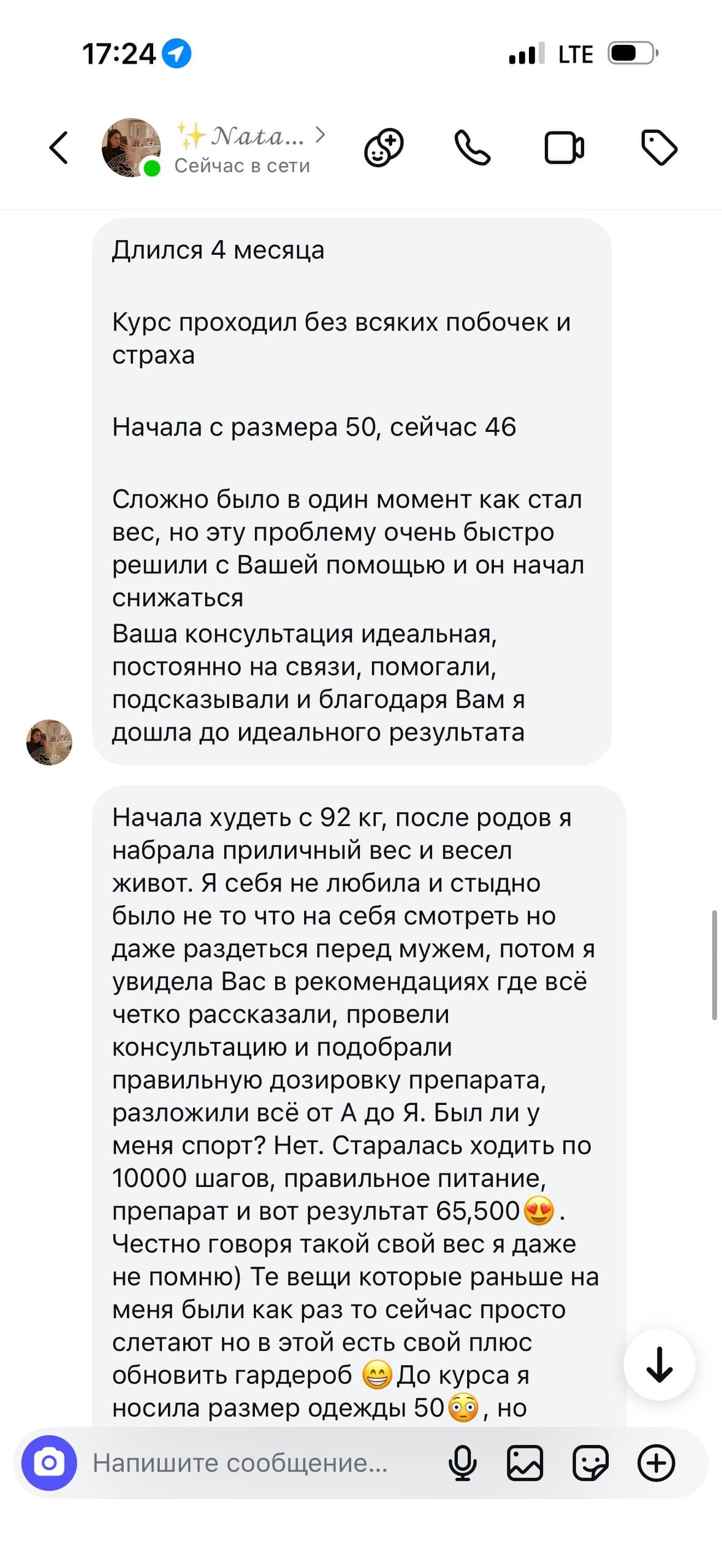
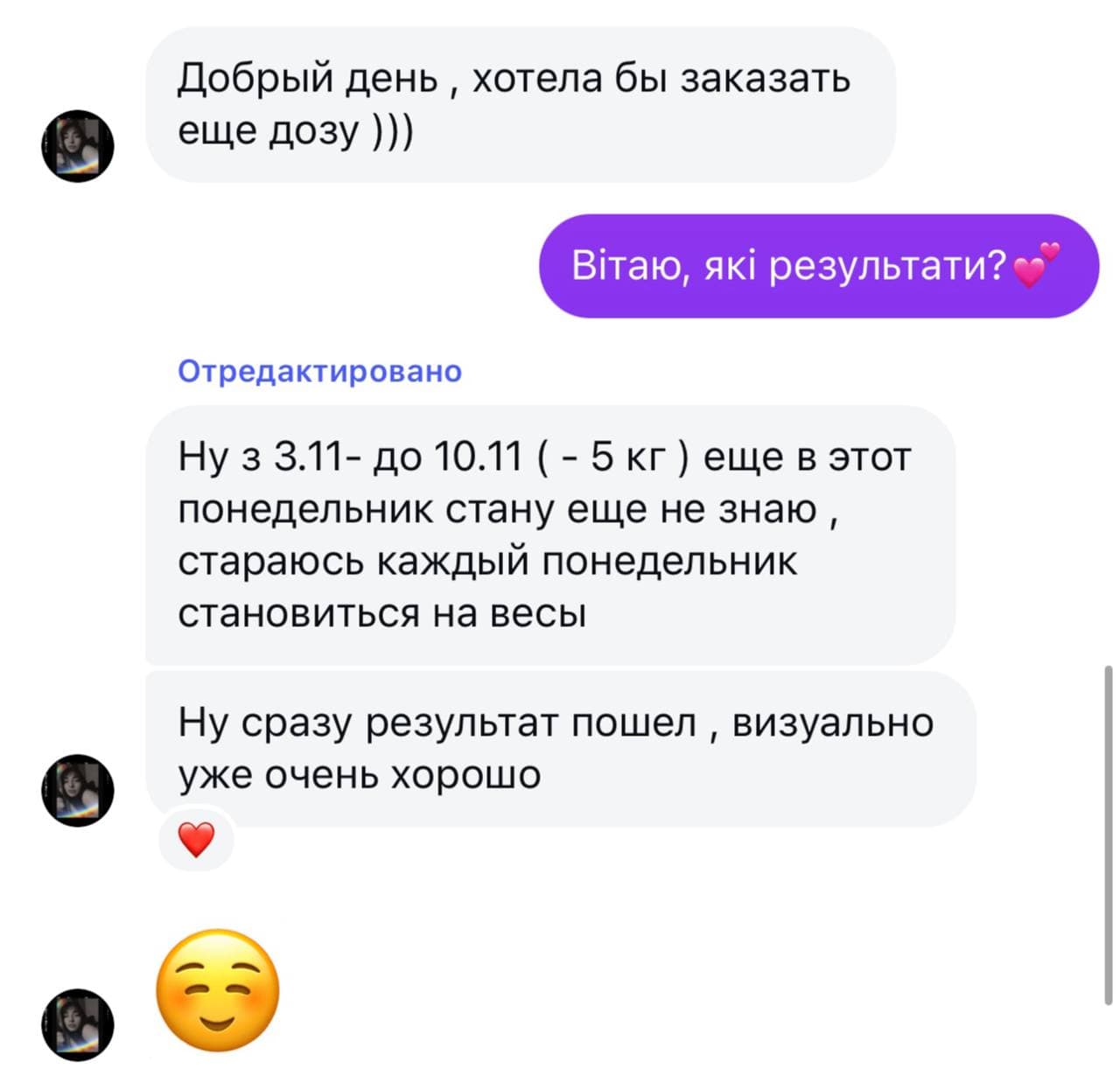
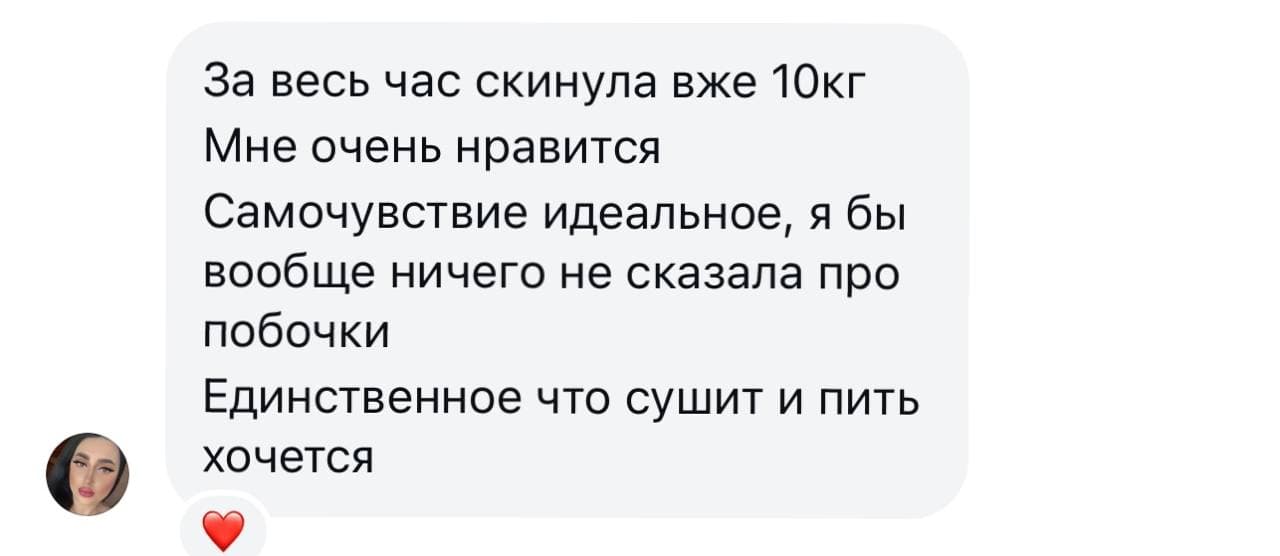
Not a local fold, but systemic weight loss — something lipolytics cannot deliver
Nataliia
34 years
Verified
Real client
34 years
Anastasia
31 years
Verified
Real client
31 years
Irina
42 years
Verified
Real client
42 years
Want the same result? Start with a free consultation.
Free consultationWho suits what
💉 Lipolytics make sense if
- You need to remove a small local fold (chin, flanks)
- Overall weight is normal, it is only about the contour
- You are ready for a course of several sessions
- There are no contraindications (pregnancy, liver disease, etc.)
🧬 GLP-1 is more effective if
- You need to lose more than 5–10 kg
- You have visceral fat, insulin resistance, obesity
- You want to influence appetite and eating behaviour
- You need an evidence-based systemic result
Not sure what to choose? Calculate your BMI or get a free consultation.
📊 BMI calculatorDo you specifically need lipolytics?
DOZA specialises in systemic weight loss (GLP-1), not local cosmetology injections. If your weight is normal and it is just a small contour question — that is not our focus, and we say so honestly. But if you are unsure whether the problem is truly only "local", a specialist will help you figure it out for free and suggest the best option.
Free specialist consultationHow much lipolytics cost
The price of a single lipolytics session in Ukraine usually starts from a few hundred hryvnias per area, and a full course (2–6 procedures) comes to several thousand. The final cost depends on the product, the number of areas and sessions. For comparison: a GLP-1 course (Mounjaro, Ozempic) is a fixed weekly injection with a predictable systemic result. A DOZA specialist will help calculate the program cost and choose the optimal option.
Let us count honestly
A full lipolytics course is 2–6 sessions per area, and it often has to be repeated every few months because the effect is temporary without a lifestyle change. Over a year that adds up to an amount comparable to a few months of a GLP-1 programme — except GLP-1 works with the whole body and the cause of weight, not a single fold. So per unit of lasting result, the systemic programme is usually the better value.
How to get a consultation
We will find a solution for your exact goal — from area correction to systemic weight loss
Message us
Via the Telegram bot or the form. Describe your goal — remove an area or reduce weight.
Specialist assessment
We review your case, BMI and contraindications and honestly tell you what is more effective.
Individual plan
You get a transparent plan and cost — with nothing unnecessary pushed on you.
FAQ
Lipolytics: the most common questions
Choose the solution that works for you
A free consultation with a DOZA specialist: we honestly tell you when lipolytics are enough and when GLP-1 is more effective.
We reply within 15 minutes during working hours
Choose the solution that works for you
A free consultation with a DOZA specialist: we honestly tell you when lipolytics are enough and when GLP-1 is more effective.
We reply within 15 minutes during working hours


